UNICEF Origins Evolution Impact Programs Funding Challenges

Table of Contents
- Historical Evolution and Foundational Role of UNICEF
- Origins and Establishment of UNICEF
- Key Global Conflicts and Crises Shaping UNICEF’s Early Mission
- Timeline of Major Milestones in UNICEF’s Evolution
- Comparative Analysis: Initial Objectives vs. Modern-Day Priorities
- Core Programs and Global Impact by Sector
- Child Survival and Health: Immunization and Disease Prevention
- Nutrition: Addressing Malnutrition Through Multisectoral Interventions
- Education: Bridging Gaps in Access and Quality
- Child Protection: Combating Exploitation and Violence
- HIV/AIDS and Health: Preventing Transmission and Supporting Orphans
- Funding Mechanisms and Financial Transparency in UNICEF
- Diverse Funding Streams and Allocation Priorities
- Financial Accountability and Transparency Measures
- Funding Efficiency in Global Crises: UNICEF vs. Other UN Agencies
- Top Donors and Their Influence on Policy Directions
- Innovations and Technological Advancements in UNICEF’s Service Delivery
- Mobile Health Platforms for Maternal and Child Health
- AI-Driven Data Analytics for Child Protection
- Blockchain for Supply Chain Transparency
- Digital Campaigns and Social Media Amplification
- Emerging Technologies in Humanitarian Response
- Challenges and Criticisms: Accountability and Controversies in UNICEF
- Recurring Criticisms and UNICEF’s Responses
- Major Controversies and Corrective Actions
- Internal Governance and Accountability Mechanisms
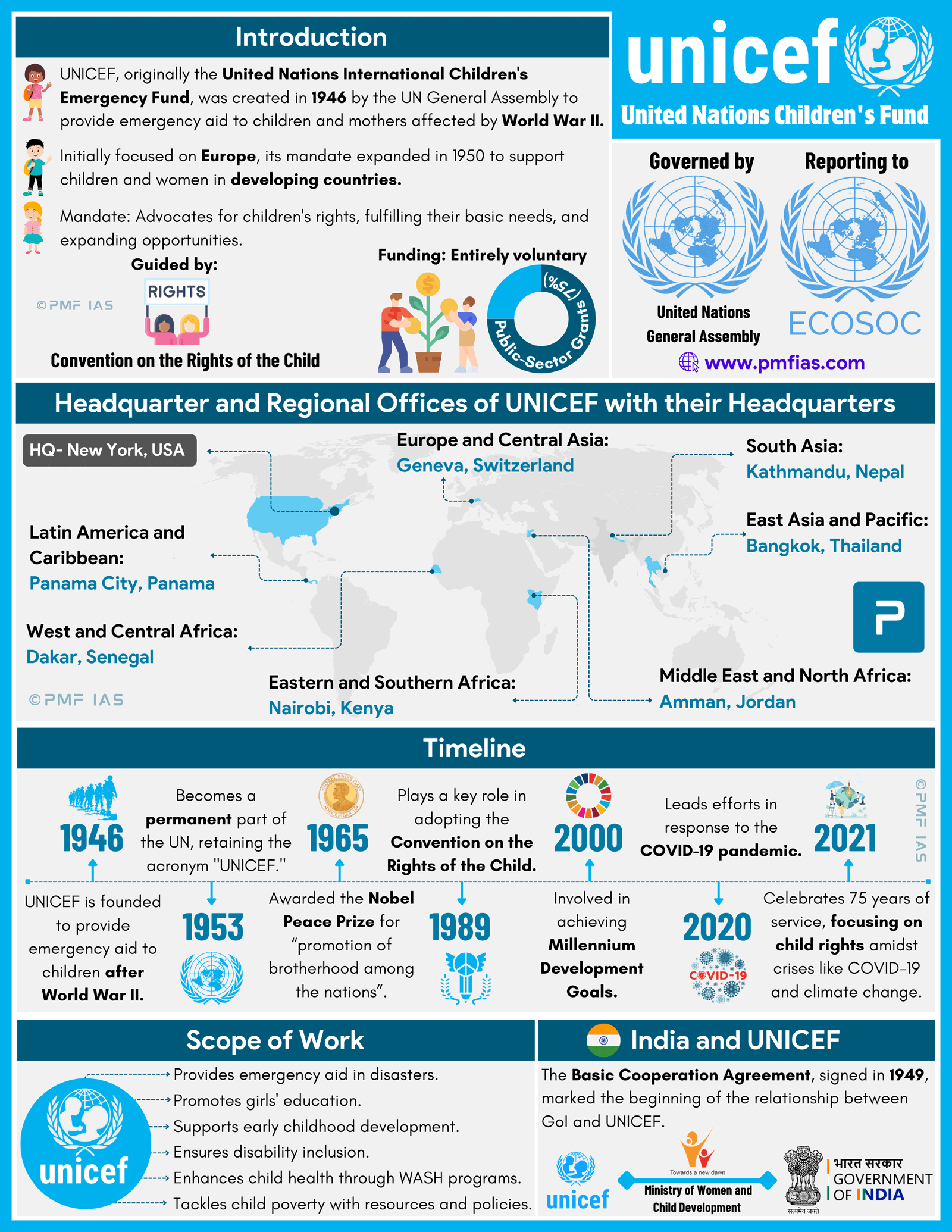
The United Nations Children's Fund 联合国 儿童 基金 会 UNICEF stands as a cornerstone of global humanitarian efforts dedicated to safeguarding the rights and well-being of children worldwide. Established in 1946 amid the devastation of World War II, its mission has evolved from immediate post-war relief to a comprehensive framework addressing systemic inequities in health, education, and protection. Over seven decades, UNICEF has expanded its operational reach through strategic partnerships with governments, non-governmental organizations, and private sector stakeholders, positioning itself as a critical intermediary in translating policy into tangible outcomes for vulnerable populations.
From pioneering the adoption of the UN Convention on the Rights of the Child in 1989 to deploying rapid-response mechanisms during crises such as Ebola outbreaks or the Syrian refugee emergency, UNICEF’s adaptive strategies reflect both its historical resilience and its commitment to innovation. The organization’s programs—spanning nutrition, immunization, emergency relief, and digital inclusion—demonstrate a data-driven approach to addressing complex challenges, while its funding mechanisms and transparency frameworks set benchmarks for accountability in international development. However, its legacy is also marked by controversies, from allegations of operational inefficiencies to ethical dilemmas in high-stakes humanitarian contexts, underscoring the delicate balance between urgency and integrity in global aid.
Historical Evolution and Foundational Role of UNICEF
The United Nations International Children’s Emergency Fund (UNICEF) was established in 1946 as a temporary agency to provide relief to children in post-World War II Europe and China. Initially focused on immediate humanitarian needs, its mandate evolved into a permanent, global institution dedicated to child welfare. The organization’s founding principles—equity, child-centric advocacy, and cross-border cooperation—were shaped by the devastation of war, malnutrition, and displacement affecting millions of children. Key conflicts, including the Holocaust and the Greek Civil War, underscored the urgent need for specialized protection and rehabilitation efforts for vulnerable children.
UNICEF’s early work laid the groundwork for its modern role, transitioning from emergency relief to long-term development initiatives. The adoption of the United Nations Convention on the Rights of the Child (UNCRC) in 1989 marked a pivotal milestone, codifying children’s rights to survival, development, education, and protection. This framework became the cornerstone of UNICEF’s operational strategy, integrating legal and programmatic alignment to address systemic challenges such as poverty, disease, and conflict.
Origins and Establishment of UNICEF
UNICEF’s creation in December 1946 was a direct response to the United Nations General Assembly Resolution 57(I), which allocated $10 million to address the dire conditions of children in war-torn regions. The agency was initially named the United Nations International Children’s Emergency Fund, reflecting its temporary, relief-focused mandate. Its founding principles were rooted in three core objectives:The agency’s first director, Ludwig B. Schroeder, emphasized its role as a neutral, non-political entity, ensuring aid reached children regardless of nationality or background. By 1953, UNICEF’s mandate was extended indefinitely, transitioning from emergency operations to permanent child welfare advocacy. This shift was formalized in 1950 when the agency’s name was shortened to United Nations Children’s Fund, though it retained the "International" in its official title to reflect its global scope.
Key Global Conflicts and Crises Shaping UNICEF’s Early Mission
UNICEF’s formative years were defined by crises that demonstrated the urgent need for specialized child protection. The post-World War II era (1945–1950) saw over 70 million children orphaned, displaced, or suffering from malnutrition in Europe and Asia. The agency’s first major operation in 1947 provided milk, vaccines, and clothing to 1.5 million children in Greece, Turkey, and China, where civil wars and famine exacerbated vulnerabilities.Other defining crises included:
These early interventions demonstrated UNICEF’s ability to operate in high-risk environments, a capability that became central to its modern emergency response framework.
Timeline of Major Milestones in UNICEF’s Evolution
UNICEF’s development can be segmented into critical phases, each marked by policy shifts, operational expansions, and global recognition. Below is a structured timeline of key milestones:| Year | Milestone | Impact on UNICEF’s Framework |
|---|---|---|
| 1946 | Establishment as a temporary relief agency for post-WWII Europe and China. | Laid foundation for emergency response protocols and cross-border aid distribution. |
| 1950 | Mandate extended indefinitely; name shortened to "United Nations Children’s Fund." | Shift from temporary relief to permanent child welfare advocacy. |
| 1959 | Adoption of the Declaration of the Rights of the Child by the UN General Assembly. | First international recognition of children’s rights, influencing UNICEF’s future policy work. |
| 1965 | Launch of the First World Summit for Children, focusing on malnutrition and education. | Established global goals for child survival and development, aligning with the International Development Strategy for the Second United Nations Development Decade (1970–1980). |
| 1989 | Adoption of the UN Convention on the Rights of the Child (UNCRC), ratified by 196 countries. | UNICEF became the lead agency for monitoring and implementing the convention, reshaping its operational priorities to include legal advocacy, education, and protection programs. |
| 1990 | Launch of the World Summit for Children, setting quantifiable goals for child health and education. | Introduced targeted, measurable objectives (e.g., reducing child mortality by two-thirds by 2000), influencing later Millennium Development Goals (MDGs). |
| 2000 | Inclusion in the Millennium Development Goals (MDGs), focusing on child mortality, education, and gender equality. | UNICEF led initiatives like GOAL 4 (Reduce Child Mortality) and GOAL 2 (Achieve Universal Primary Education), expanding its role in global development policy. |
| 2015 | Adoption of the Sustainable Development Goals (SDGs), with UNICEF leading SDG 4 (Quality Education) and SDG 3 (Good Health and Well-being). | Shift toward integrated, data-driven approaches, emphasizing leave-no-one-behind principles and humanitarian-development nexus strategies. |
Comparative Analysis: Initial Objectives vs. Modern-Day Priorities
UNICEF’s mission has undergone significant transformations, reflecting evolving global challenges. Below is a comparative table highlighting shifts in focus from its founding era to contemporary operations:| Initial Objectives (1946–1953) | Modern-Day Priorities (2020s) | Key Shifts in Focus | ||||||||||||||||||||||||||||||||||
|---|---|---|---|---|---|---|---|---|---|---|---|---|---|---|---|---|---|---|---|---|---|---|---|---|---|---|---|---|---|---|---|---|---|---|---|---|
| Emergency relief (food, clothing, medical supplies for displaced children). | Humanitarian-development nexus (integrating emergency response with long-term recovery, e.g., Syria, Yemen, Ukraine). | Expansion from short-term aid to resilience-building in protracted crises. | ||||||||||||||||||||||||||||||||||
| Rehabilitation of health systems (vaccination campaigns, maternal-child health). | Universal Health Coverage (UHC) and preventable disease eradication (e.g., polio, measles). | Shift from reactive care to proactive, systemic health interventions (e.g., Immunization Agenda 2030). | ||||||||||||||||||||||||||||||||||
| Basic education access (school supplies, teacher training in war zones). | Quality education for all (digital learning, gender-inclusive schools, SDG 4 targets). | Focus on equity, inclusivity, and technological integration (e.g., UNICEF Innovation Fund). | ||||||||||||||||||||||||||||||||||
Protection of orphaned/refugee children (shelters, legalCore Programs and Global Impact by SectorUNICEF’s operational framework is structured around six core program areas—child survival and health, nutrition, education, child protection, HIV/AIDS and health, and social policy and alternative care—each designed to address critical vulnerabilities affecting children worldwide. These programs are implemented through evidence-based interventions, regional adaptations, and partnerships with governments, NGOs, and private sector actors. The following sections outline UNICEF’s sectoral priorities, highlight successful large-scale initiatives, and demonstrate adaptive strategies in response to evolving global challenges such as climate change, digital inequality, and humanitarian crises.Child Survival and Health: Immunization and Disease PreventionUNICEF leads global efforts to reduce child mortality through immunization campaigns, disease surveillance, and maternal-child health programs. The Global Vaccine Action Plan (GVAP) and Immunization Agenda 2030 (IA2030) have been instrumental in expanding vaccine coverage, with UNICEF procuring 40% of all vaccines used worldwide and delivering them to hard-to-reach communities. Key achievements include:UNICEF’s health programs integrate community health workers (CHWs), mobile clinics, and digital health tools (e.g., mHealth platforms for vaccine tracking) to overcome geographic and logistical barriers. Cultural adaptations, such as mobile vaccination units in conflict zones or religious leader endorsements for vaccine acceptance, are critical to success. Nutrition: Addressing Malnutrition Through Multisectoral InterventionsMalnutrition—both undernutrition and micronutrient deficiencies—remains a leading cause of child mortality, affecting 149 million children under five globally (2023). UNICEF’s nutrition programs emphasize preventive, curative, and emergency responses, with a focus on stunting reduction, breastfeeding support, and fortification strategies.- Scaling up ready-to-use therapeutic foods (RUTF): In Yemen, UNICEF’s Treatment of Severe Acute Malnutrition (SAM) program reached 1.2 million children (2020–2023) using RUTF, reducing mortality rates by 40% in treated cases. Emerging challenges, such as climate-induced food insecurity, are addressed through cash-based transfers for vulnerable families and school meal programs with fortified foods. For example, in Haiti, UNICEF’s WASH-nutrition linkages (water, sanitation, and hygiene) reduced childhood diarrhea cases by 30%, a key contributor to malnutrition. Education: Bridging Gaps in Access and QualityUNICEF’s education programs prioritize inclusive, equitable learning, with a focus on girls’ education, emergency education, and digital literacy. The Education Cannot Wait (ECW) fund, co-led by UNICEF, has allocated $1.4 billion to 115 crises since 2016, ensuring 23 million children received education in conflict zones.- Girls’ education initiatives: UNICEF’s Teacher Training Programs emphasize child-centered pedagogy and inclusive education for children with disabilities. For example, in Bangladesh, the Inclusive Education Strategy trained 50,000 teachers to support 1 million children with disabilities, increasing school retention rates by 35%. Child Protection: Combating Exploitation and ViolenceChild protection is a cross-cutting priority, addressing violence, trafficking, child marriage, and digital safety. UNICEF’s Global Study on Child Marriage (2021) revealed that 1 in 5 girls is married before 18, prompting targeted interventions.- Ending child marriage: UNICEF’s Child Protection Systems Strengthening approach integrates legal reforms, social services, and community engagement. For instance, in South Sudan, the Child Protection Area of Responsibility (CP AoR) coordinated 1,200 child protection workers to assist 50,000 children affected by conflict in 2022. HIV/AIDS and Health: Preventing Transmission and Supporting OrphansUNICEF’s HIV/AIDS programs focus on prevention, treatment, and support for affected children and families. The Joint United Nations Programme on HIV/AIDS (UNAIDS) reports that 1.7 million children were living with HIV in 2022, with UNICEF playing a key role in pediatric antiretroviral therapy (ART) access.- Prevention of mother-to-child transmission (PMTCT): Funding Mechanisms and Financial Transparency in UNICEFUNICEF’s operations rely on a multi-faceted funding model designed to ensure flexibility, accountability, and responsiveness to global crises. The organization’s financial framework combines voluntary contributions from governments and private entities with assessed contributions from member states, alongside strategic partnerships that leverage additional resources. This structure enables UNICEF to allocate funds efficiently across sectors, from emergency response to long-term developmental programs, while maintaining transparency through rigorous audits and donor reporting mechanisms.UNICEF’s funding model distinguishes it from other UN agencies by its emphasis on programmatic flexibility—allowing rapid reallocation of resources during unforeseen crises. Unlike agencies with fixed mandates (e.g., WHO’s health-specific focus or WFP’s food-assistance priority), UNICEF’s cross-sectoral approach (health, education, nutrition, child protection) requires a diversified funding strategy to address intersecting challenges. Diverse Funding Streams and Allocation PrioritiesUNICEF’s financial resources are derived from three primary streams, each contributing distinct advantages to its operational capacity.Voluntary Contributions (Approximately 95% of Total Funding) Assessed Contributions (Approximately 5% of Total Funding) Partnerships and Innovative Financing Financial Accountability and Transparency MeasuresUNICEF’s financial governance is structured around three pillars: auditability, donor reporting, and real-time fund tracking. These measures ensure compliance with international standards (e.g., IATI—International Aid Transparency Initiative) and align with the UN Common Reporting Framework.UNICEF’s financial accountability is governed by:UNICEF’s transparency extends to public dashboards, such as the UNICEF Financial Tracking Tool, which maps donor contributions to specific projects (e.g., $2.2 billion allocated to COVID-19 response in 2020–2021). This level of detail surpasses agencies like WHO, which publishes aggregated expenditure reports without project-level breakdowns. Funding Efficiency in Global Crises: UNICEF vs. Other UN AgenciesUNICEF’s funding efficiency is evaluated through three metrics: speed of disbursement, adaptability, and cross-sectoral impact. During crises such as COVID-19 and the Ukraine war, UNICEF demonstrated superior agility compared to agencies with narrower mandates.
Top Donors and Their Influence on Policy DirectionsUNICEF’s strategic priorities are shaped by five key donor blocs, whose contributions often include conditional clauses or advocacy mandates. The top contributors in 2022–2023 were:
Innovations and Technological Advancements in UNICEF’s Service DeliveryUNICEF has systematically integrated cutting-edge technologies to address critical gaps in child protection, health, education, and emergency response. By leveraging digital tools, data analytics, and decentralized systems, the organization enhances operational efficiency, improves real-time decision-making, and expands reach in underserved regions. These advancements are particularly transformative in contexts where traditional infrastructure is limited, enabling scalable solutions that align with the Sustainable Development Goals (SDGs)—especially SDG 4 (Quality Education), SDG 3 (Good Health), and SDG 16 (Peace and Justice).Technological innovations at UNICEF are categorized into three primary domains: health and nutrition platforms, child protection and data-driven interventions, and supply chain and logistics optimization. Each domain utilizes distinct technological frameworks, from mobile-based health monitoring to blockchain for transparent procurement, ensuring accountability while adapting to local constraints. The following sections explore specific implementations, their technical specifications, and the challenges encountered during scaling. Mobile Health Platforms for Maternal and Child HealthUNICEF’s Mobile Alliance for Maternal Action (MAMA) and mPedigree initiatives demonstrate how mobile technology can revolutionize healthcare delivery in low-resource settings. These platforms integrate SMS, USSD (Unstructured Supplementary Service Data), and interactive voice response (IVR) to disseminate critical health information, track vaccination schedules, and verify medicine authenticity.Technical Specifications: Pilot Results and Scalability: AI-Driven Data Analytics for Child ProtectionUNICEF’s Child Protection Data Revolution (CPDR) initiative employs machine learning (ML) and predictive analytics to identify at-risk children, optimize case management, and allocate resources efficiently. The UNICEF Data for Children (D4C) platform integrates geospatial data, social media trends, and government databases to generate actionable insights.Technical Implementation: Case Study: AI in Bangladesh Blockchain for Supply Chain TransparencyUNICEF’s Blockchain for Child Rights project pilots distributed ledger technology (DLT) to enhance transparency in humanitarian aid distribution, particularly for nutrition programs and emergency cash transfers. The IBM Blockchain World Wire and Hyperledger Fabric frameworks are used to track food aid, vaccines, and school supplies from procurement to last-mile delivery.Technical Workflow: Pilot in Ethiopia (2019–2021): Digital Campaigns and Social Media AmplificationUNICEF’s digital advocacy strategy combines social media campaigns, influencer partnerships, and gamification to mobilize global support for child rights. The "#ForEveryChild" and "UNICEF Next Generation" initiatives use data-driven storytelling to influence policy and public opinion.Step-by-Step Engagement Framework: 2. Content Creation and Distribution: 3. Metrics and Policy Impact: Emerging Technologies in Humanitarian ResponseUNICEF’s adoption of emerging technologies in crises—such as drones, satellite imaging, and IoT—aims to improve speed, accuracy, and safety in disaster response. However, infrastructure limitations, cost, and ethical concerns often constrain large-scale deployment.
|

Leave a Comment
Comments are moderated before appearing. The data you submit is processed according to the Privacy Policy of Backup Greatbigstory.