Guardian Angels Exploring Beliefs Across Religion Science Culture

Table of Contents
- Historical Origins and Cultural Significance of Guardian Angels Across Major Religions
- Ancient Mythological Precursors: Daimones and Genii in Greek and Roman Traditions
- Scriptural and Theological Foundations in Abrahamic Religions
- Guardian Angels in Medieval Illuminated Manuscripts: Iconography and Symbolism
- Psychological and Modern Interpretations of Guardian Angels
- Psychological Theories and Guardian Angel Analogies
- Near-Death Experiences and Guardian Figures in Trauma Recovery
- Guardian Angels in Literature and Pop Culture
- Literary Depictions of Guardian Angels as Protagonists, Antagonists, and Symbolic Forces
- Cinematic and Televisual Portrayals: From Celestial Guardians to Ambiguous Entities
The concept of guardian angels transcends religious doctrine, weaving through ancient mythology, psychological theory, and modern storytelling as a universal symbol of protection and divine presence. From the celestial malak of Islam to Carl Jung’s archetypes of the subconscious, these ethereal figures embody humanity’s enduring quest to reconcile the spiritual with the tangible. Rooted in medieval illuminated manuscripts and Renaissance masterpieces, their portrayals have evolved alongside cultural shifts, reflecting both reverence and skepticism. Meanwhile, near-death experiences and cognitive science offer contemporary lenses through which to examine how the human mind constructs—whether consciously or subconsciously—the idea of an unseen guardian.
This exploration traces the historical trajectory of guardian angels, dissects their psychological and neuroscientific interpretations, and examines their enduring influence in literature, film, music, and digital media. By juxtaposing theological traditions with empirical inquiry, the discussion reveals how these figures serve as mirrors of societal fears, aspirations, and the persistent human need for meaning in an uncertain world.
Historical Origins and Cultural Significance of Guardian Angels Across Major Religions
The concept of guardian angels transcends monotheistic and polytheistic traditions, serving as a spiritual intermediary between the divine and humanity. Rooted in ancient cosmologies, these entities evolved into structured theological doctrines, reflecting each culture’s understanding of protection, guidance, and divine intervention. Below, the development of guardian angels is traced from pre-Christian mythologies to medieval and Renaissance interpretations, with a comparative analysis of their roles in Christianity, Islam, Judaism, Hinduism, and Buddhism.Ancient Mythological Precursors: Daimones and Genii in Greek and Roman Traditions
The idea of benevolent spiritual guardians predates organized religions, emerging in Greek and Roman mythology as daimones and genii, respectively. These entities were neither purely divine nor demonic but occupied an intermediary role, often associated with personal protection, fate, or moral guidance. Plato’s Republic (c. 380 BCE) distinguishes between good daimones—those aligned with divine will—and harmful ones, while Roman genii (singular genius) were tied to individual destinies, worshipped in household shrines. The Chaldean Oracles (2nd century CE) further blurred distinctions between guardian spirits and celestial beings, influencing later angelic hierarchies.Key features of these precursors include:
Scriptural and Theological Foundations in Abrahamic Religions
The Abrahamic traditions—Judaism, Christianity, and Islam—formalized guardian angels through scripture and rabbinic/scholastic interpretations, often drawing from shared textual roots (e.g., the Hebrew Bible and Quran). Below is a comparative table of their roles and sources:| Religion | Name of Guardian Entity | Symbolism/Role | Notable Textual Sources |
|---|---|---|---|
| Judaism | Malakh HaShares (Angel of the Presence) | Divine messenger and protector; associated with Moses (Exodus 32:34) and later rabbinic lore as a personal guardian ("hashgacha"—divine providence). |
|
| Christianity | Angelus Custodis (Guardian Angel) | Assigned by God at birth (Matthew 18:10); acts as intercessor, guide, and protector against evil. Hierarchy reflects medieval angelology (e.g., seraphim, cherubim). |
|
| Islam | Malak al-Hifz (Angel of Protection) | Records deeds (kiraman katibin) and protects from harm; linked to qadar (divine decree). Often paired with a "recording angel" (raqib). |
|
The shift from vague spiritual presences to codified guardian angels occurred through:
Guardian Angels in Medieval Illuminated Manuscripts: Iconography and Symbolism
Medieval depictions of guardian angels in illuminated manuscripts (e.g., Book of Hours, Psalter) reflect theological hierarchies and moral didactics. Key visual elements include:Contrast with Renaissance Portrayals:
Renaissance artists like Raphael (The School of Athens, 1511) and Michelangelo (Sistine Chapel) humanized guardian angels, emphasizing:
Illustrative Example:
In the Maciejowski Bible (1370s), a guardian angel’s halo is split into three sections—gold (divine), blue (heavenly), and red (earthly)—reflecting their tripartite role: intercessor, guide, and protector. This contrasts

Psychological and Modern Interpretations of Guardian Angels
The concept of guardian angels, traditionally rooted in religious and spiritual frameworks, has been reexamined through the lens of modern psychology and cognitive science. These interpretations often reframe guardian angels as symbolic manifestations of the subconscious, higher self, or evolutionary adaptations for survival. Psychological theories such as Carl Jung’s archetypes, Abraham Maslow’s peak experiences, and Freud’s superego provide alternative explanations for why humans perceive protective or guiding presences. Near-death experiences (NDEs) and trauma recovery narratives further illustrate how these interpretations align with or diverge from traditional beliefs, revealing a complex interplay between spirituality and human cognition.Modern psychology offers frameworks to dissect the psychological underpinnings of guardian angel narratives, particularly in contexts where individuals report sensing an unseen protector during crises. Cognitive science contributes by explaining the neurobiological mechanisms—such as oxytocin release and pattern recognition—that may underlie these experiences. Below, a comparative analysis of psychological theories, their analogies to guardian angels, and their critiques is presented, followed by an exploration of NDEs and trauma recovery cases.
Psychological Theories and Guardian Angel Analogies
Psychological theories frequently draw parallels between guardian angels and internal or external forces that govern human behavior, morality, and perception. The following table synthesizes key theories, their analogous interpretations of guardian angels, influential figures, and associated criticisms.| Psychological Theories | Guardian Angel Analogies | Key Figures | Criticisms |
|---|---|---|---|
|
Archetypes (Jungian Psychology) Archetypes are universal, innate models of people, behaviors, or personalities that emerge in the collective unconscious. The "guardian angel" archetype may represent the Self, a unifying symbol of wholeness and higher consciousness. |
Guardian angels as manifestations of the Self archetype, embodying wisdom, protection, and divine guidance. They may also align with the Anima/Animus, symbolizing the balanced integration of masculine/feminine traits within the psyche. | Carl Jung (1875–1961), James Hillman (1926–2011) | Critics argue that archetypes lack empirical validation and are overly reliant on subjective interpretation. The concept risks becoming a vague metaphor rather than a testable psychological model. |
|
Superego (Freudian Psychoanalysis) The superego acts as the moral conscience, internalizing societal and parental standards. It can manifest as an internal "voice" that guides behavior toward ethical or self-preserving actions. |
Guardian angels may symbolize the superego’s function as a moral compass or protective instinct, particularly in moments of danger or ethical dilemmas. The "voice" of the guardian angel could represent the superego’s admonitions or reassurances. | Sigmund Freud (1856–1939), Anna Freud (1895–1982) | Freud’s model is criticized for its deterministic and often rigid view of morality, which may not account for the personal, non-rational nature of guardian angel experiences. Additionally, the superego’s origins in childhood conditioning limit its applicability to universal spiritual concepts. |
|
Shadow (Jungian Psychology) The shadow encompasses repressed instincts, desires, and traits that are often perceived as "dark" or undesirable. When integrated, it can provide balance and depth to the conscious self. |
Guardian angels may emerge as projections of the shadow when individuals confront their fears or vulnerabilities. In trauma recovery, the guardian angel could symbolize the shadow’s transformation into a protective force after processing repressed material. | Carl Jung, Robert Johnson (1925–2021) | The shadow’s association with guardian angels risks conflating protection with unresolved trauma. Critics argue that this interpretation may pathologize spiritual experiences rather than validating them. |
|
Peak Experiences (Humanistic Psychology) Peak experiences are moments of transcendence, joy, or profound meaning, often linked to spiritual or mystical encounters. They suggest a temporary alignment with a higher self or universal consciousness. |
Guardian angels may be perceived during peak experiences as externalized symbols of divine connection or inner guidance. These encounters often involve a sense of unconditional love or protection, aligning with Maslow’s description of self-actualization. | Abraham Maslow (1908–1970), Rollo May (1909–1994) | Peak experiences are criticized for their lack of replicability and potential for misinterpretation. Without clear criteria, the distinction between genuine spiritual experiences and psychological projections becomes blurred. |
|
Attachment Theory and Oxytocin Release Attachment theory explains how bonding behaviors (e.g., trust, security) develop from early relationships. Oxytocin, a neurotransmitter, is linked to social bonding, empathy, and feelings of safety. |
The "sense of protection" from guardian angels may stem from oxytocin-mediated bonding with caregivers or perceived higher powers. In trauma, this mechanism could amplify the perception of an invisible protector as a coping strategy. | John Bowlby (1907–1990), Michael Liebowitz (1942–), Paul Zak (1956–) | Reducing guardian angel experiences to neurochemical processes may dismiss their subjective significance. Critics argue that this approach overlooks cultural and spiritual dimensions of these phenomena. |
Near-Death Experiences and Guardian Figures in Trauma Recovery
Near-death experiences (NDEs) frequently include encounters with luminous beings, protective figures, or overwhelming sensations of love and safety. These accounts challenge traditional religious interpretations by framing guardian angels as products of the brain’s adaptive responses to extreme stress or altered states of consciousness. Raymond Moody’s seminal work Life After Life (1975) documents recurring themes in NDEs, including:Case studies from NDE research reveal how these experiences align with or diverge from traditional guardian angel beliefs:
1. Alignment with Religious Beliefs:
In Moody’s case of Pam Reynolds (a woman who survived cardiac arrest and described a "guardian" guiding her through a tunnel), the experience mirrored Christian conceptions of angels as intermediaries between the divine and human realms. Her account included a figure she identified as Jesus, reinforcing the idea of a protective presence in moments of transition.
2. Divergence from Dogma:
Non-religious or atheist individuals often report similar guardian-like figures during NDEs, suggesting that these experiences may arise from universal cognitive or emotional patterns rather than specific religious conditioning. For example, a study by Bruce Greyson (After: A Doctor Explores What Near-Death Experiences Reveal About Life and Beyond, 2022) documented cases where patients described "helpers" with no religious connotations, implying a cross-cultural archetype of protection.
3. Trauma Recovery and Symbolic Guardians:
In trauma therapy, patients sometimes describe "guardian" figures emerging during processing, such as in Eye Movement Desensitization and Reprocessing (EMDR). These figures may represent:
For instance, a veteran with PTSD might visualize a "guardian angel" during flashbacks, which therapists
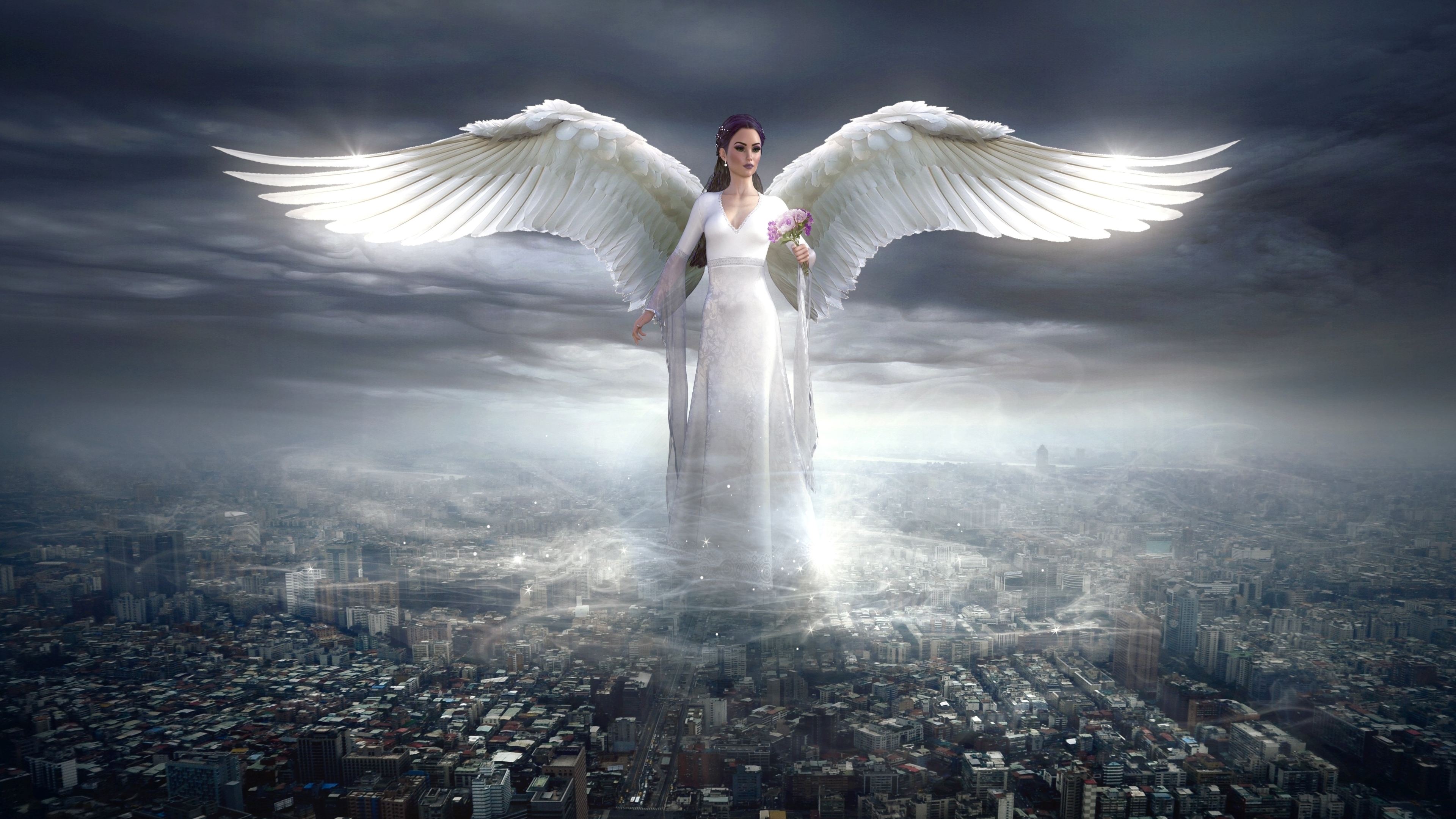
Guardian Angels in Literature and Pop Culture
Guardian angels transcend theological doctrine to become enduring archetypes in storytelling, embodying protection, moral ambiguity, and existential reflection. Their portrayal in literature, film, music, and video games evolves alongside cultural anxieties—from divine guardians in classical narratives to psychologically complex or even malevolent figures in modern media. This section explores their multifaceted roles across mediums, analyzing how creative interpretations redefine their symbolic weight while mirroring societal shifts in spirituality, technology, and human vulnerability.Guardian angels in fiction often serve as mirrors to human dilemmas: they challenge faith, expose hypocrisy, or act as catalysts for redemption. Their depictions oscillate between celestial benevolence and unsettling duality, reflecting the tension between hope and despair in storytelling. Below, their presence is dissected through curated literary works, cinematic adaptations, musical metaphors, and interactive media, revealing how each medium recontextualizes their mythos.
Literary Depictions of Guardian Angels as Protagonists, Antagonists, and Symbolic Forces
Guardian angels in literature frequently subvert expectations, appearing not as passive protectors but as active participants in human narratives—sometimes as saviors, other times as harbingers of moral reckoning. The following works illustrate their range, from Wilde’s satirical critique of divine oversight to Kushner’s exploration of angelic identity in the face of AIDS-era despair.Guardian angels in fiction often embody existential questions: Are they divine agents, projections of the human psyche, or allegories for societal ills? The selected texts below demonstrate their versatility, spanning gothic horror, magical realism, and postmodern drama.
-
The Picture of Dorian Gray (1890) – Oscar Wilde
The novel’s ambiguous "guardian" figure, Basil Hallward, functions as a moral counterpoint to Dorian’s corruption, though Wilde’s treatment blurs the line between artistic inspiration and demonic influence. The angelic idealism Basil embodies is ultimately consumed by Dorian’s hedonism, critiquing Victorian moralism and the dangers of aestheticism.
"The artist is the creator of beautiful things... but he is also the creator of beautiful thoughts."
-
The Guardian (2012) – Nick Cutter
A modern horror novel where the "guardian" is a parasitic entity disguised as a protective force, preying on human trauma. The trope is inverted: what appears benevolent (a mysterious stranger offering help) is a predatory mechanism, reflecting contemporary fears of false salvation and psychological manipulation.
-
Angels in America: A Gay Fantasia on National Themes (1991–1993) – Tony Kushner
Kushner’s Pulitzer-winning play reimagines angels as manifestations of collective guilt and divine judgment, particularly through the character of the Angel America. The angel’s role shifts from comforter to accuser, embodying the spiritual crisis of the Reagan era and the AIDS epidemic.
-
Good Omens (1990) – Terry Pratchett & Neil Gaiman
A satirical take on apocalyptic prophecy, where the angel Aziraphale and demon Crowley serve as reluctant guardians of humanity’s fate. Their dynamic subverts traditional hierarchies, portraying divine beings as bureaucratic, flawed, and oddly fond of whisky.
-
The Book of Lost Things (2006) – John Connolly
In this dark fantasy, guardian-like figures appear as guardians of a magical realm, but their loyalty is tested by the protagonist’s journey through grief and loss. The angels here are neither purely good nor evil but exist in a moral gray area, reflecting the ambiguity of protection in times of sorrow.
-
The Shadow of the Wind (2001) – Carlos Ruiz Zafón
While not explicitly about guardian angels, the novel’s eerie "Guardian of the Cemetery" (a spectral figure) embodies the protective yet ominous role of such entities. The character blurs the line between guardian and vengeful spirit, adding to the gothic atmosphere.
-
Jonathan Strange & Mr Norrell (2004) – Susanna Clarke
The magical system includes "guardian angels" as ancient, forgotten entities bound to individuals. Their portrayal is scholarly yet eerie, suggesting a lost tradition of divine protection now reduced to folklore.
-
The Angel of Death (1992) – Philip Roth
A short story where a guardian-like figure appears to a dying man, offering a choice between heaven and earth. The angel’s role is ambiguous—is he a divine messenger or a psychological construct? Roth’s prose leaves the interpretation open, emphasizing existential uncertainty.
-
The Master and Margarita (1967) – Mikhail Bulgakov
While not a guardian angel, the character of Woland (a Satanic figure) and his entourage include beings that blur the line between angelic and demonic. Their interactions with humans reveal a universe where moral categories are fluid and protection is often a ruse.
-
The Angel Esmeralda (2008) – Diana Wynne Jones
A fantasy novel where angels are reimagined as bureaucratic, rule-bound beings who occasionally intervene in human affairs. Esmeralda, a guardian, is more concerned with paperwork than salvation, offering a comedic yet philosophical take on divine oversight.
Cinematic and Televisual Portrayals: From Celestial Guardians to Ambiguous Entities
Film and television redefine guardian angels through visual storytelling, often contrasting their traditional roles with modern skepticism or supernatural horror. The following table compares key depictions, highlighting how medium-specific traits (e.g., visual symbolism in film, serialized character arcs in TV) shape their portrayal.Guardian angels in cinema and television frequently serve as metaphors for faith, trauma, or the subconscious. Their evolution from romanticized protectors (City of Angels) to morally complex or outright malevolent figures (Lucifer) mirrors broader cultural shifts toward cynicism and psychological depth in storytelling.
| Medium | Character Traits | Themes | Audience Reception |
|---|---|---|---|
| City of Angels (1998, Film) |
|
|
|
| Constantine (2005, Film) |
|
|
|
Leave a Comment
Comments are moderated before appearing. The data you submit is processed according to the Privacy Policy of Backup Greatbigstory.